Big 5 Personality Development: How Traits Evolve Over Time
The Big 5 personality test provides a snapshot of your current traits, but what if your personality isn’t fixed? Many people wonder whether their core characteristics can change as they age and experience life’s journey. Can you actually become a different person over time? This is a question that psychologists have studied for decades.
In the past, many experts believed that personality was "set in stone" by the age of 30. However, modern research tells a much more exciting story. This article explores how your Big 5 traits evolve from childhood through adulthood. Understanding these changes helps you see both the stability and the malleability of who you are.
Knowing where you stand on the Big 5 spectrum right now gives you a roadmap for where you're headed. You can start your test today to see where you stand on the OCEAN scale. By identifying your current profile, you can better anticipate how you might grow in the future.
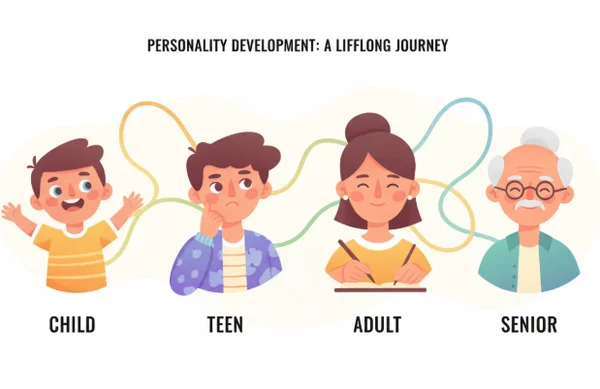
Scientific Foundations of Personality Development
To understand how we change, we must first look at the science behind personality. The Big 5 model, also known as the Five-Factor Model (FFM), is the gold standard in psychology. It measures five broad dimensions: Openness, Conscientiousness, Extraversion, Agreeableness, and Neuroticism.
The Nature vs. Nurture Debate in Personality Psychology
One of the oldest questions in science is how much of our personality comes from our DNA. Research on twins indicates that 40-50% of our personality traits are inherited. This represents the "nature" side of the debate. It explains why some babies are naturally more calm while others are more active.
However, the remaining 50% to 60% comes from "nurture." This includes your upbringing, culture, and life experiences. Because such a large part of our personality is influenced by the environment, there is plenty of room for personality development throughout your life. Using a scientific personality test helps you distinguish between your natural tendencies and your learned behaviors.
Longitudinal Studies That Track Personality Across Decades
Psychologists use longitudinal studies to track the same group of people over many years. Some of these studies have followed individuals from elementary school all the way into their 70s. These studies are the "time machines" of psychology.
Long-term studies reveal an interesting pattern. While we maintain some similarities to our younger selves, we're not exactly the same person. For instance, the most extraverted child in a classroom at age 10 often remains more extraverted than peers at age 60, though their overall extraversion level may have shifted.
Key Findings on Personality Stability and Change
The most important finding in modern psychology is that personality is both stable and plastic. Stability means your "rank order" compared to others stays relatively the same. If you are more organized than your friends today, you will likely still be more organized than them in twenty years.
Plasticity means that your absolute scores can change. Almost everyone experiences shifts in their Big 5 profile as they move through different life stages. To see your current levels, you can take the Big 5 test and get a baseline for your own development journey.
How Big 5 Traits Develop From Childhood to Adolescence
Personality development begins the moment we are born. In early childhood, psychologists often refer to "temperament" rather than personality. As children grow and their brains develop, these basic temperaments turn into the Big 5 traits we recognize in adults.
Openness: From Childhood Curiosity to Adult Creativity
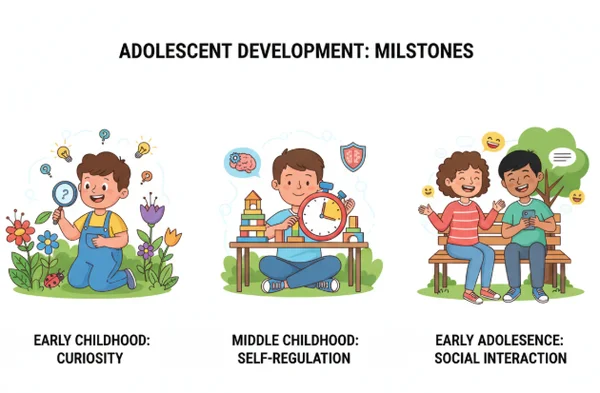
In children, Openness to Experience often looks like simple curiosity. It is the desire to touch everything, ask "why," and play with new toys. As children enter adolescence, this trait becomes more complex. It turns into an interest in abstract ideas, art, and different worldviews.
Teenagers who score high in Openness are often the ones seeking out new music, fashion, or political ideas. This is a critical period where "curiosity" matures into "creativity." High openness in youth is a strong predictor of creative success in adulthood.
Conscientiousness: The Emergence of Self-Regulation Skills
Conscientiousness is often at its lowest during childhood and early adolescence. Young children have very little impulse control. They want what they want immediately. As the prefrontal cortex of the brain develops, children learn to "self-regulate."
During the teenage years, Conscientiousness starts to climb. This is when students learn to study for exams, keep their rooms clean, and think about the future. This trait is essential for academic success. It is also a core part of the Big 5 personality test results that help people improve their productivity.
Extraversion and Agreeableness: Social Development Milestones
Extraversion and Agreeableness focus on how we interact with others. In childhood, these traits are displayed through play. An agreeable child shares their toys, while an extraverted child seeks out the center of the group.
During adolescence, these traits can fluctuate wildly. Peer pressure and the need to fit in can change how a teenager behaves. However, by the end of the teenage years, social patterns become more stable. Adolescents begin to find their "social niche," which sets the stage for their adult social lives.
Adult Personality Transformation: The Big 5 in Maturity
For a long time, people thought adults stopped changing once they reached their 20s. We now know this is false. In fact, some of the most consistent personality changes happen between the ages of 20 and 50.
The "Maturity Principle" in Personality Development
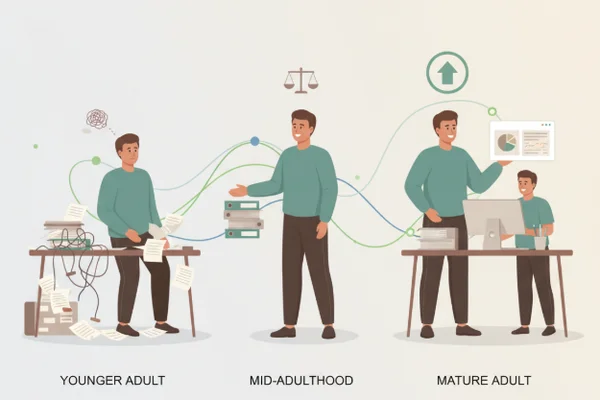
Psychologists call the most common pattern of change the Maturity Principle. This principle states that as people grow older, they tend to become more socially dominant, more agreeable, and more conscientious. Essentially, most people become "better" versions of themselves as they take on adult responsibilities.
This shift is a natural reaction to the demands of work, marriage, and parenting. You can track your own progress toward maturity by using an online Big 5 test every few years to see how your scores evolve.
Why Most People Become More Agreeable and Conscientious With Age
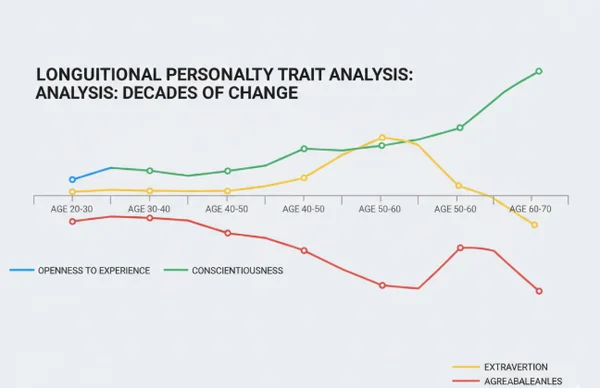
Have you ever noticed that older adults often seem more patient or organized than they were in their youth? This isn't just a coincidence. Research shows that Agreeableness and Conscientiousness tend to increase steadily through middle age.
Entering the workplace demands reliability—a boost in Conscientiousness. Starting a family requires cooperation and kindness—enhancing Agreeableness. These life roles function like a 'personality gym,' developing traits that help us thrive in society. Conversely, Neuroticism (emotional instability) tends to decrease as people learn better coping mechanisms for stress.
Stability vs. Change: Which Traits Remain Consistent?
While Agreeableness and Conscientiousness change the most, other traits like Extraversion and Openness are more stable. Extraversion often splits into two parts. Social dominance tends to increase, while social vitality may slightly decrease as we age.
Openness usually stays high until late adulthood, when it might decline slightly. Despite these changes, the "core" of who you are remains recognizable. This balance of change and stability is what makes the Big 5 model so reliable for long-term self-understanding.
Factors That Influence Personality Change Across the Lifespan
If personality isn't just about aging, what else makes it change? Several external and internal factors play a huge role in shaping our Big 5 profile over time.
Life Events and Their Impact on Personality Traits
Significant life events can act as "turning points" for our personality. Common events that trigger change include:
- Starting a first job: This often leads to a spike in Conscientiousness.
- Traveling abroad: Living in a new culture can significantly increase Openness.
- Experiencing trauma: This can temporarily or permanently increase Neuroticism.
Interestingly, it is not just the event itself, but how we react to it, that causes the change. By taking a free Big 5 personality test, you can see how recent life changes might have shifted your perspective.
How Relationships Shape Your Big 5 Profile
The people we spend time with have a massive influence on who we become. Being in a stable, loving relationship often leads to a decrease in Neuroticism and an increase in Agreeableness. We often "smooth out" our rough edges to live harmoniously with a partner.
On the other hand, toxic relationships can have the opposite effect. Our social environment acts as a mirror, reinforcing certain traits and discouraging others. This is why choosing the right social circle is one of the best ways to facilitate positive personal growth.
The Role of Conscious Effort in Trait Modification
Can you change your personality just because you want to? The answer is yes. Recent research on "volitional personality change" shows that if you set specific goals, you can shift your traits.
For example, if you want to be more extraverted, you can set a goal to speak up in meetings. Over time, these behaviors become habits. Those habits eventually become part of your personality. The first step is awareness. You must see your results to know which traits you want to work on.
Your Personality Journey: Understanding Where You're Headed
The Big 5 model reveals that personality is a journey, not a destination. While you have a biological foundation, your life experiences and choices play a huge role in who you become. We generally become more emotionally stable, cooperative, and disciplined as we age, but the path is unique for everyone.
Your current Big 5 profile isn't just a snapshot—it's a launchpad for personal development. By understanding your natural tendencies, you can strategically build on your strengths and develop new approaches in areas you want to grow. Remember, your score today doesn't define your entire future; it simply shows you where you are starting from.
Are you curious about your current personality profile? Whether you are a student, a professional, or just someone looking to grow, getting a scientific assessment is a great first step. Start your Big 5 test now and get the insights you need to navigate your personal development journey with confidence.
The Takeaway
Can I really change my personality as an adult?
Yes, you can. While your core traits have a level of stability, they are not fixed. Through conscious effort, major life changes, and the natural process of aging, your Big 5 scores can and do shift. Many people find that they become more organized or less anxious as they gain more life experience.
At what age does personality become most stable?
Research suggests that personality reaches its highest level of stability between the ages of 40 and 60. During this "plateau," people usually have established careers and long-term relationships, which keep their traits consistent. However, change is still possible even in late adulthood.
Do my Big 5 results predict how I'll change in the future?
Your current results show your tendencies, but they don't lock you into one path. However, knowing your scores can help you predict how you might react to future stress or opportunities. You can use a Big 5 personality inventory to identify growth areas you want to focus on.
How can I use my personality test results to facilitate positive growth?
The best way to use your results is to identify "thresholds." If your Conscientiousness is low and it's hurting your career, you can create systems to help you stay organized. Awareness is the key to intentional change. By knowing your baseline, you can measure your progress over time.
Is it possible to develop traits that aren't naturally part of my Big 5 profile?
You can develop "learned behaviors" that mimic certain traits. For instance, an introvert can learn to be a great public speaker. While their "natural" Extraversion score might not change overnight, their ability to function in extraverted ways will improve. You can try our free tool to discover which traits are your strongest and which ones might need more conscious practice.