Big 5 Personality Test for Managers: Lead & Motivate Your Team
In today's dynamic workplace, effective leadership goes beyond managing tasks; it's about understanding and empowering people. As a manager, you're constantly seeking ways to improve communication, boost motivation, and build a cohesive team. But what if the key was already within your team members, waiting to be unlocked? The Big 5 Personality Test offers a scientifically validated framework to do just that. What is the Big 5 personality test and how can it transform your leadership? This guide will show you how to leverage these powerful insights to lead with greater impact.
By understanding the core personality traits of your team, you can move from guesswork to a data-driven leadership strategy. This knowledge empowers you to tailor communication, optimize roles, and proactively resolve conflicts, fostering an environment where every individual truly thrives. Ready to begin your journey toward more insightful leadership? You can take a free Big 5 personality test yourself to see how it works.

Understanding Your Team with the Big 5 Personality Model
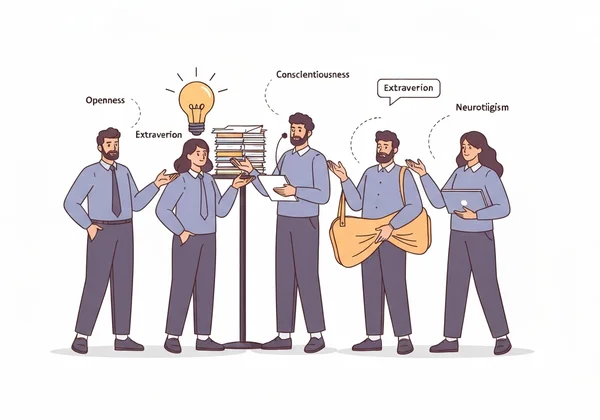
The Big 5 model is not just another personality quiz; it's one of the most respected and scientifically supported frameworks in psychology. It assesses personality across five broad dimensions, often remembered by the acronym OCEAN. Unlike tests that put people into rigid boxes, the Big 5 places individuals on a spectrum for each trait, offering a nuanced and realistic view of their character. This makes it an invaluable tool to manage team personality dynamics effectively.
What Are the Five Factors and Why Do They Matter in the Workplace?
Each of the five factors represents a key aspect of how people think, feel, and behave. Understanding them is the first step to leveraging them in a professional context.
- Openness to Experience: This trait reflects a person's curiosity, creativity, and appreciation for new ideas. High scorers are often innovative and imaginative, while low scorers are more conventional and practical.
- Conscientiousness: This dimension measures reliability, organization, and discipline. Highly conscientious employees are dependable and goal-oriented. Low scorers tend to be more spontaneous and flexible.
- Extraversion: This factor relates to an individual's sociability, assertiveness, and emotional expressiveness. Extraverts draw energy from social interaction, while introverts recharge through solitude.
- Agreeableness: This trait indicates how compassionate and cooperative a person is. High scorers are typically trusting and helpful. Low scorers are more competitive and analytical.
- Neuroticism: Also known as Emotional Stability, this dimension assesses a person's tendency to experience negative emotions like anxiety and stress. High scorers are more emotionally reactive, while low scorers are calm and resilient.
Decoding Personality Traits: High vs. Low Scores in a Team Setting
To make this practical, let's explore how these traits manifest in your team. Recognizing these patterns is key to understanding team dynamics.
-
Openness:
- High Scorers: Excellent for brainstorming sessions and roles requiring creative problem-solving. They might struggle with highly repetitive tasks.
- Low Scorers: Perfect for roles that require adherence to process and established procedures. They provide stability and ensure consistency.
-
Conscientiousness:
- High Scorers: The project managers and detail-checkers of your team. They deliver on time and to a high standard but can be resistant to sudden changes.
- Low Scorers: Adaptable and great at handling unexpected challenges. They may need support with deadlines and long-term planning.
-
Extraversion:
- High Scorers: Natural networkers and presenters. They thrive in client-facing or collaborative roles. They may talk more than they listen in meetings.
- Low Scorers (Introverts): Deep thinkers and excellent listeners. They excel at tasks requiring focus and produce high-quality, thoughtful work.
-
Agreeableness:
- High Scorers: The glue that holds the team together. They are natural mediators and foster a positive atmosphere. They might avoid necessary conflict.
- Low Scorers: Willing to challenge the status quo and make difficult decisions. Their directness can sometimes create friction if not managed carefully.
-
Neuroticism:
-
High Scorers: Highly attuned to risks and potential problems. Their caution can be an asset in quality control. They may require more reassurance and a stable work environment.
-
Low Scorers: Remain calm under pressure and handle stress well. They are stabilizing forces during a crisis but may underestimate potential threats.
-
Applying Big 5 for Effective Team Leadership
Grasping the theory is a starting point; the real transformation, however, unfolds in its practical application. With insights from a personality test for teams, you can refine your leadership style, enhance collaboration, and assign roles more strategically. This proactive approach helps unlock your team's potential and builds a foundation for sustained success.
Enhancing Communication & Collaboration Through Trait Awareness
Miscommunication is often a root cause of team friction. Using the Big 5, you can tailor your communication style to resonate with different personalities.
- For High Openness: Frame discussions around possibilities and innovation. Ask "what if" questions.
- For High Conscientiousness: Provide clear, detailed instructions and stick to the agenda.
- For Extraverts: Create opportunities for them to talk through ideas and collaborate openly.
- For Introverts: Give them time to process information before asking for their input, perhaps via email or a shared document.
- For High Agreeableness: Use collaborative and inclusive language. Emphasize team goals.
- For High Neuroticism: Offer clear support, provide reassurance, and create a predictable environment.
Optimizing Role Assignment and Project Work with Big 5 Insights
Placing team members in roles that align with their natural tendencies is a powerful driver of engagement and productivity. While skills are crucial, personality fit can be the difference between someone who is just competent and someone who is truly exceptional.
Consider a new project launch. You'll need someone with high Openness to brainstorm initial concepts, a highly Conscientious individual to manage the project plan and deadlines, an Extravert to pitch the idea to stakeholders, and an Introvert to conduct deep market research. By understanding your team’s composition through a scientific Big 5 personality test, you can assemble a balanced and highly effective project group.

Motivating Individual Employees Based on Big 5 Traits
A one-size-fits-all approach to motivation rarely works. The Big 5 provides a blueprint for personalizing your approach to feedback, recognition, and conflict resolution. This is a core component of effective big 5 for leadership. When employees feel understood, their engagement and loyalty skyrocket.
Tailoring Feedback and Recognition to Diverse Personality Types
How you acknowledge effort matters.
- Extraverts often appreciate public recognition in a team meeting.
- Introverts may prefer a thoughtful, private email acknowledging their specific contribution.
- High Agreeableness individuals are motivated by feedback that highlights their positive impact on the team.
- High Conscientiousness employees value recognition that is specific and tied to their hard work and achievements.
Conflict Resolution: Navigating Disagreements with Personality Empathy
When conflict arises, understanding the underlying personality dynamics can help you mediate more effectively. A clash between a low-Agreeableness employee who is direct and a high-Agreeableness employee who avoids confrontation isn't about one person being "right." It's about differing communication styles.
As a manager, you can coach them to understand each other's perspectives. Encourage the direct person to soften their delivery and the conflict-averse person to voice their concerns constructively. This builds empathy and turns potential conflicts into opportunities for growth. To better understand these dynamics, you can get personalized Big 5 insights for your team.

Empower Your Team: The Big 5 as Your Strategic Leadership Tool
The Big 5 Personality Test is more than an assessment; it's a strategic tool for modern leadership. By investing time to understand your team's psychological makeup, you can communicate more effectively, motivate more personally, and build a team that is not only productive but also resilient and engaged. It empowers you to lead with empathy and precision.
Instead of making assumptions about your team's motivations, truly understand them. Ready to empower your leadership and unlock your team's full potential? Start your free Big 5 test now today and see the actionable insights that will drive your team forward.
Frequently Asked Questions for Managers About the Big 5 Test
How accurate is the Big 5 personality test for team assessment?
The Big 5 is widely regarded by psychologists as one of the most reliable and valid personality assessments. For team assessment, it provides a robust framework for understanding group dynamics, communication styles, and potential areas of conflict or synergy. It's best used for development and team-building rather than for hiring decisions alone.
Is the Big 5 test scientifically valid for organizational use?
Absolutely. The Five-Factor Model is backed by decades of research across diverse cultures and populations. Its stability and predictive power in relation to job performance and team effectiveness make it a highly credible tool for organizational development, leadership training, and improving workplace dynamics.
What are the five factors of the Big 5 and how do they impact team dynamics?
The five factors are Openness, Conscientiousness, Extraversion, Agreeableness, and Neuroticism (OCEAN). They impact team dynamics by influencing how members communicate, handle stress, approach tasks, and collaborate. A team with diverse traits can be highly innovative and balanced, provided the manager understands how to harness everyone's unique strengths. You can discover your Big 5 traits to better understand this model.
How can HR managers use Big 5 results to improve talent management?
HR managers can use Big 5 insights to design more effective onboarding programs, create personalized professional development plans, identify high-potential leaders, and assemble balanced project teams. It provides a common language for discussing individual differences and helps foster a culture of self-awareness and mutual respect.
What's the difference between Big 5 and other personality tests for hiring?
Unlike type-based tests like the Myers-Briggs (MBTI) that assign people to one of 16 categories, the Big 5 measures traits on a continuous scale. This provides a more nuanced and less rigid picture of an individual's personality. While no personality test should be the sole factor in hiring, the Big 5's strong scientific foundation makes it a valuable tool for understanding candidate predispositions for specific roles.