Big 5 Personality Test Myths Debunked
The world of personality testing is filled with myths and half-truths. These misconceptions often stop people from discovering valuable insights about themselves. Many worry that personality tests are "just like astrology" or that they will be labeled for life. These fears create unnecessary barriers to self-discovery.
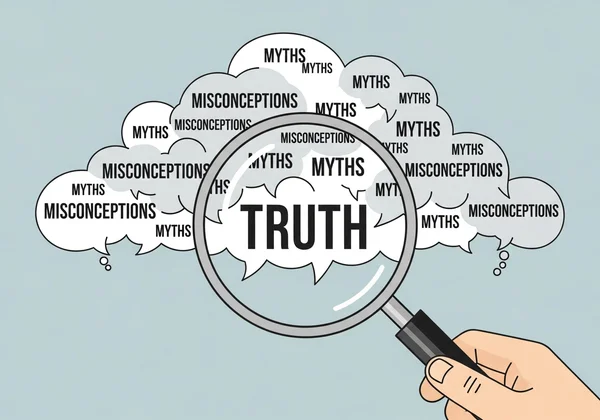
Let's clear up seven common misunderstandings about this personality evaluation. We will use scientific research and psychological expertise to separate fact from fiction. Our goal is to show you what the Big 5 truly is—and what it isn't.
Understanding this powerful tool can transform how you view yourself. It provides a clear, scientific path to self-awareness. Ready to see beyond the myths? You can get started with a scientific assessment to learn about your unique traits.
Myth 1: The Big 5 Is Just Another Form of Astrology
One of the most frequent criticisms is that personality tests are no better than horoscopes. This idea suggests that the results are vague, unscientific, and designed to flatter everyone. However, the Big 5 model stands apart due to its rigorous scientific origins.
The Scientific Foundation of the Big 5 Model
The Big 5, also known as the Five-Factor Model, is not a new trend. It is the result of decades of psychological research. Scientists analyzed language used to describe personality traits from various cultures. They found that five broad dimensions consistently appeared: Openness, Conscientiousness, Extraversion, Agreeableness, and Neuroticism (OCEAN).
This model is empirically based, meaning it was developed from real-world data, not abstract theory. Its reliability and validity have been tested and confirmed in hundreds of peer-reviewed studies across the globe. This makes it a trusted framework in academic psychology and professional settings.
How the Big 5 Differs from Astrology and Other Pseudoscientific Approaches
Astrology and similar systems offer descriptions that are often ambiguous and universally applicable—a phenomenon known as the Barnum effect. For example, a horoscope might say, "You have a great need for other people to like and admire you." This is true for almost everyone.
The Big 5, however, delivers specific, measurable results. It places you on a spectrum for each of the five traits. Your responses are compared to a large, diverse population, creating a nuanced profile. Your profile is unique, highlighting your distinct combination of characteristics rather than assigning you to a generic type.
Myth 2: Your Big 5 Results Define You for Life
Another common fear is that a personality test will put you in a box. People worry that their results will become a permanent, unchangeable label. This myth misunderstands the nature of personality traits and how they function over a lifetime.
Understanding Trait Stability vs. Change Over Time
Research in psychology shows that Big 5 personality traits remain relatively stable throughout adulthood. This stability makes the test particularly useful, as it captures enduring patterns in your thoughts, feelings, and behaviors. If your personality changed completely from day to day, the concept would be meaningless.
However, "stable" does not mean "static." While your core traits are unlikely to flip entirely (an extreme introvert rarely becomes an extreme extravert), they can and do shift over time. This change is often gradual and can be influenced by life events, conscious effort, and personal growth.
How Environment and Experiences Influence Your Personality Profile
Your personality is not just a product of your genes; it is shaped by your experiences. Major life events like starting a new career, entering a long-term relationship, or becoming a parent can influence your traits. For instance, increased responsibilities at work might lead to a gradual increase in Conscientiousness.
Therapy, self-reflection, and intentional practice can also lead to meaningful changes. Your results are not a life sentence. Instead, they are a snapshot of your current disposition, offering a valuable baseline for personal development. Understanding where you stand is the first step toward growth, and a free Big 5 test can provide that starting point.

Myth 3: The Big 5 Can Diagnose Mental Health Disorders
In a world increasingly aware of mental health, it's easy to confuse personality assessments with clinical diagnostic tools. Some people take a personality test hoping it will explain their anxiety or depression. This is a dangerous and incorrect assumption.
Clinical vs. Personality Assessment: Understanding the Differences
This assessment is designed to describe the range of normal personality variation in the general population. It measures traits like emotional stability (the opposite of Neuroticism) and extraversion. It is not designed to identify or diagnose clinical conditions like major depressive disorder, anxiety disorders, or ADHD.
Clinical diagnoses are made by qualified mental health professionals using specific diagnostic criteria, such as those in the DSM-5 (Diagnostic and Statistical Manual of Mental Disorders). This process involves a comprehensive evaluation that goes far beyond a self-report personality questionnaire.
When to Seek Professional Mental Health Evaluation
Certain personality traits, such as high Neuroticism, may increase the risk for some mental health issues. However, the Big 5 test cannot confirm a clinical diagnosis. It serves as a self-awareness tool, not a replacement for professional medical advice.
If you are experiencing significant emotional distress, persistent low mood, or anxiety that interferes with your daily life, it is crucial to speak with a doctor, therapist, or counselor. They can provide an accurate diagnosis and guide you toward appropriate treatment and support.
Myth 4: High Scores on Neuroticism Mean You're "Broken"
The word "Neuroticism" often carries negative baggage. People who score high on this trait may worry that it means they are flawed, weak, or emotionally "broken." This belief is a harmful oversimplification that ignores the complexities of this personality dimension.
The Adaptive Value of Neuroticism in Different Contexts
Neuroticism reflects a person's sensitivity to negative emotions like anxiety, worry, and sadness. While high levels can be challenging, this sensitivity also has adaptive benefits. People high in Neuroticism are often more vigilant about potential threats and dangers, which can lead to better preparation and risk avoidance.
This emotional sensitivity can also foster empathy, creativity, and a deep appreciation for art and beauty. In certain professions, such as those requiring careful risk assessment or artistic expression, a degree of Neuroticism can be a significant asset.
Embracing Your Emotional Sensitivity as a Strength
Instead of viewing high Neuroticism as a flaw, it's more productive to see it as a core part of your temperament that can be managed and even harnessed. By developing emotional regulation skills and self-awareness, you can use your sensitivity to your advantage.
Understanding this trait allows you to anticipate your emotional reactions and develop healthy coping strategies. It's not about eliminating the trait but learning to work with it. Your personality profile is a tool for empowerment, not a reason for self-criticism.
Myth 5: The Big 5 Is Only Useful for Academic Research
Because of its scientific roots, some people believe this framework is a dry, academic tool with no practical value. They assume it's something only psychology students and researchers care about. In reality, this model has numerous real-world applications.
Real-World Applications in Career Development and Counseling
Understanding your personality profile can be incredibly helpful for career planning. For example, a person high in Extraversion might thrive in sales or public relations, while someone high in Conscientiousness may excel in project management or accounting.
Career counselors use these insights to help clients identify jobs that align with their natural tendencies, leading to greater job satisfaction and success. It can also highlight potential challenges, such as a highly agreeable person needing to learn how to be more assertive in a leadership role. Discovering your traits can be the first step to finding a fulfilling career.
How Businesses and Organizations Leverage Big 5 Insights
Many forward-thinking companies use Big 5 insights for team building and leadership development. A manager who understands their team members' personality profiles can communicate more effectively, assign tasks more strategically, and foster a more collaborative environment.
For example, knowing that one team member is highly open to experience suggests they would be great for brainstorming new ideas. Another who is highly conscientious would be ideal for managing the details of a project plan. The Big 5 is a practical tool for optimizing human potential in the workplace.

Myth 6: Taking a Big 5 Assessment Is Too Complicated or Time-Consuming
The idea of a "scientific" test can sound intimidating. Some people imagine a long, difficult exam that requires hours of intense concentration. This perception may prevent them from taking a test that could offer them significant benefits.
The Science Behind Question Design and Test Length
A well-designed Big 5 test, like the one offered at Big5personalitytest.com, is carefully crafted to be both comprehensive and efficient. The questions are straightforward statements about your behaviors and preferences, not trick questions or logic puzzles.
Test creators use statistical methods to ensure that the assessment is long enough to be reliable but not so long that it causes fatigue. Each question is designed to measure a specific facet of one of the five core traits, and the combined responses create a highly accurate profile.
How Technology Has Made Personality Assessment More Accessible
In the past, personality tests were often administered with paper and pencil and scored manually. Today, technology has revolutionized the process. Online platforms provide an intuitive and seamless experience.
You can complete the assessment from the comfort of your home, at your own pace. The interface shows your progress, and your results are calculated instantly upon completion. This accessibility makes it easier than ever for anyone to gain scientific insights into their personality.
Myth 7: Your Big 5 Results Are Just a Collection of Stereotypes
A final myth is that the Big 5 oversimplifies human nature, reducing your complex identity to a few generic labels. This concern arises from a misunderstanding of how the five traits interact to form a unique personality.
The Nuanced Nature of Trait Interactions and Profiles
Your personality is not defined by a single trait. The real insight comes from understanding how your scores on all five dimensions interact. For example, two people can both be high in Extraversion, but their personalities will be vastly different if one is high in Agreeableness and the other is low.
A high Extravert who is also highly Agreeable may be warm, friendly, and sociable. A high Extravert who is low in Agreeableness might be more assertive, dominant, and competitive. Your complete profile, with all its highs and lows, creates a signature that is uniquely yours.
How Individual Context Shapes Personality Interpretation
The meaning of your traits also depends on your personal context—your culture, goals, and life circumstances. Your results are not meant to be rigid labels but a framework for self-reflection.
The goal is to use this information to better understand your motivations, navigate your relationships, and make more conscious choices. It's a starting point for a deeper conversation with yourself about who you are and who you want to become.
Your Path to Authentic Self-Discovery Starts Here
Once we cut through the myths, the truth becomes evident: this scientific tool can genuinely transform your self-discovery journey. It is far removed from the misconceptions that surround it. This assessment offers valuable insights without imposing rigid labels.
Understanding what this framework truly offers can open doors to personal growth, better relationships, and more informed life decisions. It provides a reliable map to your inner world, helping you navigate your future with greater confidence.
If you're ready to move past the myths and discover your unique personality profile, we invite you to take our comprehensive assessment today. Your journey toward authentic self-understanding begins with a single, scientifically-informed step. Start your test now to receive your free results.
The Takeaway
How accurate is the Big 5 Personality Test compared to other personality assessments?
The Big 5 is widely considered the gold standard in personality psychology due to its strong scientific validation. Unlike many other popular tests, such as the Myers-Briggs Type Indicator (MBTI), it is backed by decades of independent, peer-reviewed research. Its statistical reliability and validity make it a highly accurate tool for understanding core personality traits.
Can employers use my Big 5 results against me in hiring decisions?
Some companies use personality assessments in their hiring process, typically for roles where certain traits are highly relevant. However, these tests are legally required to be job-related and non-discriminatory. This scientific tool is used to understand a candidate's work style, not to make definitive hire/no-hire decisions in isolation. It's one piece of a much larger puzzle.
How often should I retake this personality evaluation?
While core personality traits are fairly stable in adulthood, they can evolve. Retaking the test every few years or after a significant life event (like a career change or new relationship) can be insightful. It allows you to track your personal growth and see how your experiences may have shaped you. You can always take the test again to get an updated snapshot.
What if my Big 5 results don't match how I see myself?
This is a valuable opportunity for self-reflection. First, consider that the test reflects your patterns of behavior, which may differ from your ideal self-image. It can also be helpful to ask a trusted friend or family member if they think the results are accurate. Ultimately, the results are not a final judgment but a data point to help you explore your identity more deeply.