Big 5 Personality Test: Nature vs Nurture Explained
Have you ever wondered what makes you, you? Is your personality something you were born with, a fixed blueprint passed down from your parents? Or is it shaped by your friendships, your upbringing, and the unique path your life has taken? This is the heart of the age-old nature vs. nurture debate.
This question isn't just a philosophical puzzle. Understanding the origins of our personality traits can transform how we see ourselves and our potential for growth. In this article, we'll explore this fascinating topic through the lens of the Big 5 personality model, the most scientifically respected framework for understanding personality.
The Big 5 model provides a clear map of our core traits, but where does that map come from? By diving into the science, you can gain a deeper appreciation for your own psychological makeup. To see where you stand, you can always discover your unique profile with our free Big 5 test. Let's unravel the threads of genetics and experience that weave together to form your personality.

Understanding Nature vs. Nurture in Big 5 Personality
The nature versus nurture debate is one of the oldest discussions in psychology. It asks a simple but profound question: To what extent are our behaviors and traits determined by our genetic inheritance (nature) versus our life experiences and environment (nurture)?
The Enduring Debate: How Personality Develops
For centuries, thinkers have argued for one side or the other. Those who lean toward "nature" believe that our personality is largely pre-programmed by our DNA. From this perspective, traits like being outgoing or anxious are seen as inherited characteristics, similar to eye color or height.
On the other hand, the "nurture" perspective argues that we are born as blank slates. Our personalities are then sculpted by our environment—our family, culture, education, and relationships. This view suggests that anyone can become anything, given the right circumstances and experiences.
Today, however, virtually no scientist sees it as a "either/or" question. Modern psychology recognizes that both nature and nurture are essential. They don't just coexist; they constantly interact in complex ways to shape who we are.
Why This Matters for Your Big 5 Test Results
Understanding this debate is crucial when you look at your own Big 5 personality test results. Your scores on the five traits—Openness, Conscientiousness, Extraversion, Agreeableness, and Neuroticism (learn more about the OCEAN traits here)—are not just a random label. They reflect a combination of your genetic predispositions and your life's journey.
Knowing this empowers you. Your results aren't a final judgment or a fixed destiny. Instead, they are a starting point for self-awareness. Recognizing your natural tendencies can help you understand your strengths and identify areas where you might want to grow. It gives you the insight to build an environment that supports your well-being and helps you achieve your goals.
The Genetic Blueprint: Heritability of OCEAN Traits
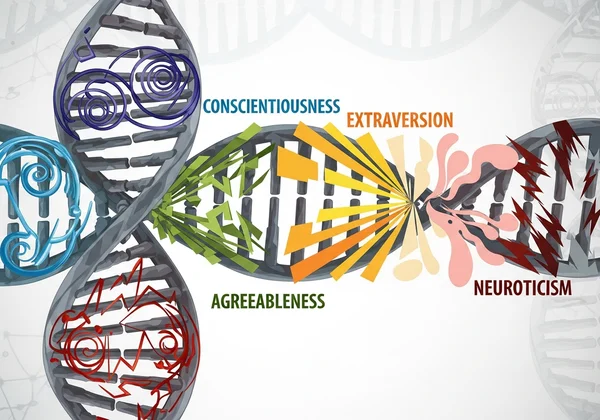
To understand the "nature" side of the equation, psychologists have spent decades studying the heritability of personality. Heritability is a measure of how much of the differences between people on a certain trait can be explained by their genetic differences.
Insights from Twin and Adoption Studies
The most powerful evidence for the genetic basis of personality comes from twin and adoption studies. Scientists compare identical twins (who share 100% of their genes) with fraternal twins (who share about 50%). They often find that identical twins are significantly more similar in their Big 5 traits, even when raised in different families.
Adoption studies reveal a fascinating pattern. Even when raised apart, children often resemble their biological parents more closely in personality traits. A child's personality often shows a stronger resemblance to their biological parents, whom they may have never met, than to the adoptive parents who raised them. These studies consistently suggest that genetics account for roughly 40-60% of the variation in Big 5 personality traits.
The Role of Epigenetics in Personality Expression
The story doesn't end with DNA. A fascinating field called epigenetics adds another layer of complexity. Think of your DNA as a giant cookbook with thousands of recipes (genes). Epigenetics is like the chef who decides which recipes to use and when.
Your life experiences—like stress, diet, or social interactions—can act as signals that tell your body to "turn on" or "turn off" certain genes. This means that even with a genetic predisposition for a certain trait, your environment plays a crucial role in whether and how that trait is expressed.
Exploring Each Big 5 Trait's Genetic Component
Research shows that all five of the core traits in the OCEAN model have a significant genetic component.
- Openness to Experience: Your curiosity, creativity, and love for new ideas are moderately heritable.
- Conscientiousness: Genetics play a strong role in your levels of organization, discipline, and reliability.
- Extraversion: Your tendency to be sociable, assertive, and energetic is one of the most heritable traits.
- Agreeableness: Your inclination toward compassion, cooperation, and kindness also has genetic roots.
- Neuroticism: Your emotional stability and sensitivity to stress are significantly influenced by your genes.
This genetic blueprint provides your baseline, but it's the environment that helps build the final structure.
Environmental Sculpting: Shaping Your Personality Development
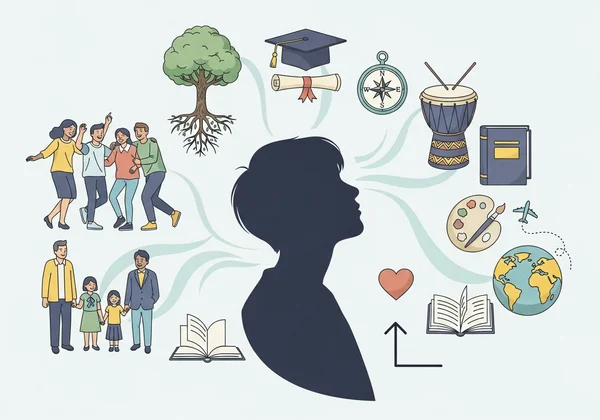
While genetics provide the foundation, your environment acts as the sculptor, continuously shaping and refining your personality throughout your life. These "nurture" influences come from every direction.
Family Dynamics and Early Childhood Experiences
Your earliest experiences are incredibly powerful. The bond you formed with your parents or caregivers, the parenting style you were raised with, and the overall atmosphere of your home helped shape your core traits. For example, a warm and supportive environment can foster higher levels of Agreeableness and emotional stability.
Peer Influence and Social Learning
As you grow, your friends and social circles become increasingly important. You learn by observing others, adopting social norms, and receiving feedback from your peers. These interactions can reinforce certain traits and discourage others, influencing everything from your level of Extraversion to your openness to new ideas.
Cultural Context and Life Events
Culture acts like a sculptor. In societies valuing introversion, even naturally outgoing individuals might adapt quieter habits. Furthermore, major life events—like going to college, starting a new career, entering a long-term relationship, or experiencing a loss—can create significant shifts in your personality.
Can Big 5 Personality Traits Change Over Time?
This leads to a critical question: is your personality set in stone, or can it change? Research reveals a nuanced truth: personality evolves gradually, shaped by conscious effort and life experiences. Personality traits are remarkably stable over a lifetime, meaning your fundamental disposition tends to remain consistent. Someone who is highly extraverted at 20 is likely to still be extraverted at 60.
However, change is absolutely possible. Think of your personality as clay: genetics sets its initial texture, but life’s experiences continually reshape it. People tend to become more conscientious and agreeable and less neurotic as they age. Moreover, with conscious effort and targeted goals, you can intentionally work to develop aspects of your personality.
Synthesizing the Influence: An Interplay of Factors
The true answer to the nature vs. nurture debate is not a 50/50 split. Instead, it’s a dynamic and continuous dance between your genes and your world.
Beyond Dichotomy: The Gene-Environment Interaction
It’s not nature or nurture; it’s nature via nurture. Your genes subtly guide your choices. An extrovert might naturally seek social gatherings, reinforcing their outgoing tendencies.
Conversely, the environment can influence how genes are expressed. Someone with a genetic predisposition for Neuroticism might develop into a calm and resilient adult if raised in a highly stable and supportive environment. It’s this constant feedback loop that creates your unique personality.
Implications for Personal Growth and Self-Understanding
Armed with this knowledge, you can take charge of your personal growth like never before. It means you are not simply a victim of your genes or your circumstances. You are an active participant in your own development.
By understanding your natural tendencies, you can make more informed choices about your life. You can learn to lean into your strengths and develop strategies to manage your challenges. Understanding your baseline is the first step, which you can take with our scientific personality test. It provides the self-knowledge you need to navigate your world effectively.
Beyond Genes and Environment: Embracing Your Unique Big 5 Personality
The debate between nature and nurture ultimately resolves into a beautiful synthesis: your personality is a product of both. Your genes provide the initial sketch, and your life experiences add the color, shading, and detail that create the final masterpiece that is you.
Understanding this interplay frees you from deterministic thinking. You are not trapped by your DNA, nor are you solely a product of your past. You possess a unique combination of traits that offers its own set of strengths and opportunities for growth. The Big 5 Personality Test is not a label but a mirror, reflecting your tendencies and providing a foundation for deeper self-awareness.
Ready to explore the unique profile that nature and nurture have created in you? Start your Big 5 test now and gain actionable insights to begin your journey of self-discovery.
Frequently Asked Questions About Big 5 Personality Development
Is the Big 5 Personality Test scientifically valid?
Yes, the Big 5 (or Five-Factor Model) is widely considered the gold standard in personality psychology. It is based on decades of research and has been validated across different cultures and populations. Its reliability and validity make it a trusted tool for both personal insight and academic research. Learn more about how psychologists use the Big 5 model.
What are the five factors of the Big 5?
The five factors are easily remembered by the acronym OCEAN:
- Openness: Measures your curiosity, imagination, and preference for novelty.
- Conscientiousness: Reflects your level of organization, responsibility, and goal-directed behavior.
- Extraversion: Indicates your sociability, assertiveness, and emotional expression.
- Agreeableness: Gauges your tendency to be cooperative, compassionate, and trusting.
- Neuroticism: Assesses your emotional stability and tendency to experience negative emotions like anxiety and stress.
How accurate is the Big 5 Personality Test?
The accuracy of a Big 5 Personality Test depends on the quality of the questions and its scientific foundation. A well-designed assessment provides a highly reliable snapshot of your core personality traits. The key is to answer the questions honestly based on how you typically are, not how you wish to be. The accuracy depends on a well-designed assessment, like the one you can take on our site.
Can my Big 5 personality traits change over time?
While your core personality is generally stable, it is not completely fixed. Significant life events, new roles, and intentional personal development efforts can lead to gradual changes in your Big 5 traits over your lifetime. This combination of stability and potential for change makes understanding your personality a valuable lifelong tool.