Big 5 Personality Test Results: Your Actionable Personal Development Plan
You've just completed the Big 5 Personality Test and have your scores in hand. It's a fascinating snapshot of your core traits, but you might be asking yourself: What do I do with this information now? This is where the real journey of self-discovery begins. Your results are not just a label; they are a powerful blueprint for growth. This guide will show you how to transform those scores into a concrete, actionable personal development plan that fosters real-world success and self-improvement.
The scientifically validated Big 5 Personality Test is your starting point for deeper self-awareness. By understanding your unique profile, you can harness your natural strengths and strategically address your challenges. If you haven't taken the test yet, you can get your results in minutes with our free personality test.

Decoding Your Big 5 Results: The OCEAN Model for Growth
Before you can build a plan, you need to fully understand the landscape of your personality. The Big 5, often remembered by the acronym OCEAN, provides a framework for looking at five key dimensions: Openness, Conscientiousness, Extraversion, Agreeableness, and Neuroticism. Each score represents a point on a spectrum, not a rigid category.

Understanding Your Unique Personal Traits
Your personality isn't just one score; it's the dynamic interplay of all five. A high score in Openness combined with low Conscientiousness paints a very different picture than a high score in Openness combined with high Conscientiousness. The first person might be a brilliant but scattered artist, while the second could be a meticulous innovator. Look at your complete profile to see the unique combination of personal traits that makes you who you are. Don't judge your scores as "good" or "bad"—simply see them as indicators of your natural tendencies.
Beyond the Scores: Identifying Strengths and Challenges
Every trait, at any level, comes with its own set of potential strengths and challenges. For example, high Agreeableness can make you a wonderfully supportive friend and team player (a strength), but it might also lead you to avoid necessary conflict (a challenge). Conversely, low Agreeableness might make you a strong negotiator (a strength) but could cause friction in team settings (a challenge). A thorough self-assessment involves identifying both sides of the coin for each of your dominant traits. This balanced view is the foundation of an effective development plan.
Crafting Your Big 5 Personal Development Plan
Now it’s time to move from insight to action. Your big 5 personal development journey is about making small, intentional changes that align with your goals. It’s not about changing who you are, but about becoming the most effective version of yourself. This is where you can truly discover your potential.
Setting SMART Self-Improvement Goals
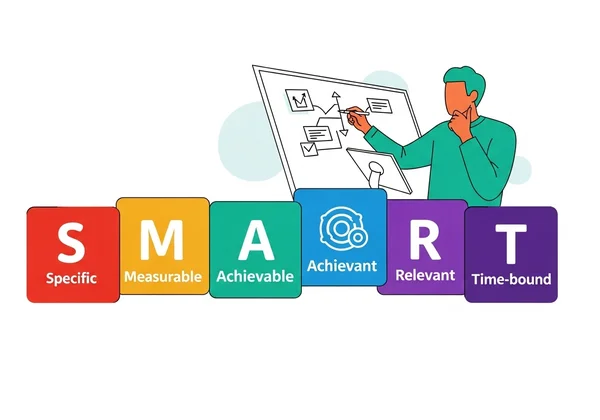
A vague goal like "be more organized" is hard to act on. Instead, use the SMART framework to set clear targets:
- Specific: What exactly do you want to achieve?
- Measurable: How will you track your progress?
- Achievable: Is this goal realistic for you right now?
- Relevant: Does this goal align with your values and overall aims?
- Time-bound: When do you want to achieve this by?
For someone with low Conscientiousness, a SMART goal could be: "I will spend 15 minutes every evening planning my tasks for the next day, using a digital planner, for the next 30 days." These are the kind of self-improvement goals that lead to lasting change.
Strategies for Openness & Conscientiousness
These traits often relate to how you interact with ideas and structure your life.
- To Enhance Openness: If your score is lower than you'd like, schedule time for creativity enhancement. Try one new thing each week: listen to a different music genre, cook a new recipe, visit a museum, or read a book outside your usual interests.
- To Boost Conscientiousness: If you struggle with organization, focus on productivity tips. Start small. Use the "two-minute rule"—if a task takes less than two minutes, do it immediately. Break larger projects into smaller, manageable steps to avoid feeling overwhelmed.
Strategies for Extraversion, Agreeableness & Neuroticism
These traits heavily influence your social and emotional worlds.
- To Manage Extraversion: High extraverts should protect their energy from social burnout, while introverts can schedule low-stakes social interactions to build their social skills without exhaustion.
- To Balance Agreeableness: If you're highly agreeable, practice saying "no" to small requests to build your assertiveness muscle. If you're less agreeable, make a conscious effort to actively listen and validate someone else's perspective before sharing your own.
- To Navigate Neuroticism: High neuroticism means greater emotional sensitivity. Practice emotional regulation techniques like mindfulness, journaling, or deep-breathing exercises. These practices can help you manage stress and respond to situations with greater calm.
Applying Insights: Big 5 for Real-World Growth
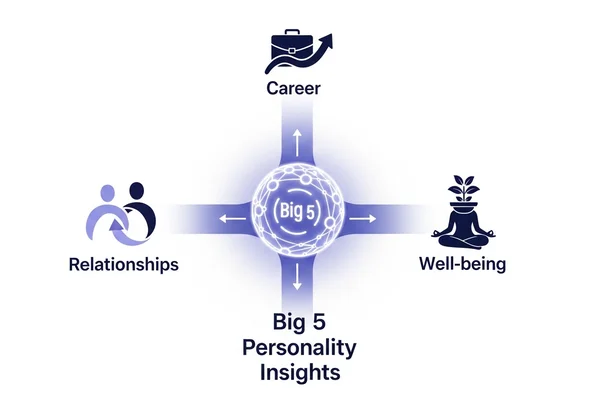
A personal development plan is only useful if it impacts your daily life. Here’s how to use big 5 results to create meaningful change in the areas that matter most.
Enhancing Career and Professional Life
Understanding your personality can revolutionize your career path. A highly conscientious individual might thrive in roles that require precision and reliability, like accounting or project management. Someone high in extraversion may excel in sales or public relations. Use your results not as a limitation, but as a guide to find roles where your natural tendencies are a professional asset, leading to greater job satisfaction and workplace success.
Strengthening Relationships & Communication
Your Big 5 profile provides powerful relationship insights. If you know you're low on agreeableness, you can be more mindful of how your directness affects sensitive partners or friends. If your partner is highly introverted, you can understand their need for solitude isn't a rejection of you. This awareness fosters empathy and helps you adapt your communication style, building stronger and more resilient connections.
Cultivating Emotional Well-being and Resilience
Your personality traits, especially neuroticism, are closely linked to your emotional life. By understanding your predisposition to stress or anxiety, you can proactively build resilience. This involves developing your emotional intelligence—the ability to recognize and manage your own emotions and understand the emotions of others. Practices like meditation and regular exercise can be particularly effective tools for fostering a stable sense of well-being. To get started, you can take our free test.
Your Continuous Journey of Self-Discovery
Beyond the scores, your Big 5 results serve as an invaluable roadmap, guiding you toward continuous self-discovery and personal growth. They provide a scientifically-backed lens through which to understand your inner world. By translating these insights into a personalized development plan, you empower yourself to make conscious choices that enhance your career, relationships, and overall happiness.
This is not a one-time fix but a lifelong journey of learning and adapting. Ready to unlock your full potential and truly thrive? Start by understanding your unique personality profile. Take the next step and explore your traits today.
Frequently Asked Questions About Big 5 Personal Development
How accurate is the Big 5 personality test?
The Big 5 model is one of the most scientifically validated and reliable psychological models of personality. It is widely used in academic research and professional settings. While no test can capture 100% of a person's complexity, the Big 5 provides a robust and accurate framework for understanding core personality traits.
What are the five factors of the Big 5?
The five factors, often remembered by the acronym OCEAN, are:
- Openness: Your curiosity, creativity, and appreciation for new experiences.
- Conscientiousness: Your level of organization, discipline, and goal-oriented behavior.
- Extraversion: Your energy level in social situations and tendency to seek stimulation from others.
- Agreeableness: Your tendency to be compassionate, cooperative, and considerate.
- Neuroticism: Your propensity to experience negative emotions like anxiety and stress.
Can my Big 5 personality traits change over time?
Research shows that personality traits are relatively stable throughout adulthood but are not set in stone. While your fundamental disposition is unlikely to change dramatically, you can absolutely develop habits, skills, and coping mechanisms that modify how your traits are expressed. Personal development is about working with your traits, not against them.
How can I use my Big 5 results for career planning?
Your Big 5 results can be a valuable tool for career planning by helping you identify work environments and roles that align with your natural tendencies. For example, a person high in Openness might feel stifled in a highly routine job. The online personality test can provide the self-awareness needed to make more informed and fulfilling career choices.
Why should I consider the AI-driven enhanced report?
While the free results give you your core scores, our AI-driven enhanced report goes much deeper. It provides a unique analysis based on your specific combination of traits, offering personalized insights, detailed strengths and weaknesses, and tailored, actionable recommendations for your career, relationships, and personal growth. It's the next step for anyone serious about turning their results into a comprehensive action plan.