Big 5 Personality Test: Strengths, Limitations, & Accuracy
The quest to understand ourselves is a timeless human endeavor. From ancient philosophies to modern social media quizzes, we are fascinated by what makes us tick. In the world of scientific psychology, the Big 5 Personality Test stands out as a gold standard. But in an age of endless online assessments, a crucial question arises: How accurate is the Big 5 personality test?
This article offers a balanced, honest look at the Five-Factor Model—the theory behind the test. We'll explore its powerful strengths, acknowledge its important limitations, and help you understand how to use it as a responsible tool for self-discovery. By understanding both sides, you can unlock genuine insights. Ready to begin? You can discover your traits on our platform.
Unpacking the Big 5's Strengths and Scientific Validity
Unlike many popular personality quizzes, the Big 5 isn't based on anecdotes or archetypes. It's grounded in decades of rigorous psychological research, giving it a level of credibility that few other models can match. Its strengths are rooted in its scientific foundation and its proven ability to offer consistent, meaningful insights.
The Foundation: Consensus in Psychology & Research
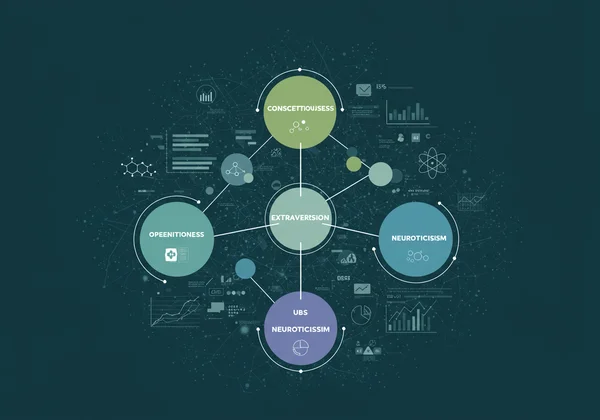
The Big 5 model, often remembered by the acronym OCEAN (Openness, Conscientiousness, Extraversion, Agreeableness, Neuroticism), didn't emerge overnight. It was developed through a process called lexical analysis, where researchers studied thousands of personality-describing words in language. They found that these words consistently clustered around five broad dimensions. This Five-Factor Model is now the most widely accepted framework for personality among research psychologists worldwide. It provides a common language and a robust structure for studying how people differ.
Reliability and Predictive Power: Consistent Insights
A key strength of the Big 5 is its reliability. A well-designed test will produce similar results if you take it multiple times, assuming no major life changes have occurred. This stability makes it a trustworthy measure of your core traits.
More importantly, the Big 5 has significant predictive power. Studies have consistently linked these five traits to real-world outcomes. For example, Conscientiousness is a strong predictor of academic success and job performance. Extraversion is linked to leadership roles, while Agreeableness is associated with relationship satisfaction. These connections make the test more than just a naval-gazing exercise; it’s a tool that provides actionable insights into your life's trajectory. You can see how your traits align with these patterns with a free personality test.
Common Criticisms and Limitations of the Big 5 Test
No tool is perfect, and to use the Big 5 responsibly, we must understand its limitations. Acknowledging these critiques doesn't invalidate the test; it provides a more nuanced and accurate picture of what it can and cannot do. Being aware of these points builds trust and ensures you interpret your results wisely.
The Challenge of Self-Report Bias
The Big 5 test is a self-report inventory, meaning it relies entirely on your own answers. This introduces the possibility of bias. People may subconsciously answer in a way that reflects their ideal self rather than their actual self (social desirability bias). Similarly, our current mood can influence our responses. If you're having a bad day, you might rate your Neuroticism higher than you would otherwise. This is a fundamental challenge for all psychological assessment tools that rely on self-perception.

Cultural Universality: An Ongoing Debate
While the five factors have been identified in dozens of cultures, there is an ongoing debate about their universality. The way a trait like Extraversion is expressed in an individualistic culture (like the United States) may look very different from how it's expressed in a collectivist culture (like Japan). Some researchers argue that the model may not fully capture the personality dimensions that are most important in non-Western societies. The core structure appears robust, but cultural context is a crucial layer of interpretation.
Contextual Specificity vs. General Traits
The Big 5 measures your broad, general personality traits—your typical way of thinking, feeling, and behaving. However, it doesn’t predict your behavior in every specific situation. You might be a strong introvert (low Extraversion) but act very outgoing at your best friend’s wedding. The situation itself plays a powerful role in shaping our actions. The test gives you the big picture of your personality, but it can't account for the moment-to-moment variability of human behavior.
Descriptive, Not Explanatory: What It Doesn't Tell Us
Perhaps the most important limitation to grasp is that the Big 5 is descriptive, not explanatory. It can tell you that you are high in Openness, but it can't tell you why. Is it due to your genetics, your upbringing, or your life experiences? The test provides a "what," not a "why." It's a map of your psychological landscape, but it's not the geological history of how that landscape was formed. For deeper insights, take our free test and reflect on your results.
So, How Accurate is the Big 5 Personality Test for You?
Given its strengths and limitations, how should you approach your own results? The accuracy of the test isn't just about the science behind it; it's also about how you use it. When viewed as a tool for guided self-reflection, its value becomes immense.
Interpreting Your Results: A Snapshot, Not a Diagnosis
First and foremost, remember that your results are a snapshot, not a permanent, unchangeable label. Your scores indicate your tendencies, not your destiny. It's crucial to understand that the Big 5 Personality Test is not a clinical diagnostic tool. It cannot diagnose mental health conditions. It is a guide for personal growth and understanding your behavioral patterns, helping you identify areas of strength and potential challenges.
Maximizing Accuracy: Honesty and Self-Reflection
The key to getting the most accurate results lies with you. When you take the assessment, follow these simple guidelines:
- Be Honest: Answer based on how you typically are, not how you wish you were.
- Don't Overthink: Go with your first instinct. Your immediate response is often the most genuine.
- Reflect on the Spectrum: Remember that each trait is a spectrum. Being high or low isn't "good" or "bad"—each end has its own unique advantages and disadvantages.
After receiving your scores, the real work begins. Use them as a prompt for reflection. Do your results resonate with your life experiences? Do they offer a new perspective on your relationships or career choices?

A Balanced Perspective: Leveraging the Big 5's Power Responsibly
The Big 5 personality test is a powerful, scientifically validated instrument that offers a reliable window into our core traits. It provides a structured framework for understanding ourselves and others, predicting life outcomes with surprising accuracy. However, its value is maximized when we acknowledge its limitations—the reliance on self-reporting, the nuances of culture, and its descriptive nature.
By approaching it not as a definitive judgment but as a starting point for curiosity and reflection, you can unlock its true potential. It's a tool to empower you, not to label you.
Ready to explore your personality with a clear, informed perspective? Start your Big 5 test now and gain actionable insights into the unique person you are.
Frequently Asked Questions About Big 5 Test Accuracy & Validity
How accurate is the Big 5 personality test?
The Big 5 is considered highly accurate and reliable among psychologists for measuring broad, stable personality traits. Its accuracy for an individual depends on honest self-reporting. When taken thoughtfully, it provides a very strong indication of one's position on the five major personality dimensions.
Is the Big 5 test scientifically valid?
Yes. The Big 5 test is based on the Five-Factor Model, which is the most empirically supported and widely accepted personality framework in the scientific community. Decades of research have demonstrated its validity and reliability across various populations and contexts.
What personality test is used by psychologists?
Research psychologists overwhelmingly prefer the Five-Factor Model (Big 5) for personality assessment. While other tests exist, the Big 5 is the standard for academic research and evidence-based practice due to its strong psychometric properties. Many professionals use an online OCEAN test for this purpose.
What is the difference between Myers-Briggs and Big Five?
The main difference lies in their scientific foundation. The Big 5 is a dimensional model (you score on a spectrum) derived from empirical data and is the standard in academic psychology. The Myers-Briggs Type Indicator (MBTI) sorts people into one of 16 rigid "types" and has significantly less scientific support for its validity and reliability.
What are common criticisms of the Big 5 personality test?
The most common criticisms include its reliance on self-report, which can be biased; the ongoing debate about its applicability across all cultures; its inability to predict behavior in specific situations; and the fact that it describes personality traits without explaining their origins. Understanding these limitations is key to using the personality assessment tool effectively.