Big 5 Personality Test vs. DISC & Enneagram: Which is Most Scientific?
Navigating the world of personality tests can feel overwhelming. With so many models like DISC and the Enneagram promising deep insights, how do you know which one is truly right for you? Whether you're a student, a professional focused on team development, or simply curious about what makes you tick, choosing the right tool is essential.
This article cuts through the noise. We will compare the scientifically-validated Big 5 Personality Test with two other popular systems: DISC and the Enneagram. By understanding their foundations, strengths, and best use cases, you can make an informed decision for your self-growth journey.
If you're looking for a reliable, research-backed framework to understand your core traits, the Big 5 is the gold standard. You can start your free test on our platform to get actionable insights grounded in decades of psychological science.
Understanding the Scientific Big 5 Personality Test
The Big 5 Personality Test is not just another trend; it's the most widely accepted and empirically supported model of personality structure used by psychologists today. It avoids boxing people into rigid "types" and instead measures where you fall on a spectrum across five core dimensions.
The OCEAN Model: Five Core Dimensions Explored
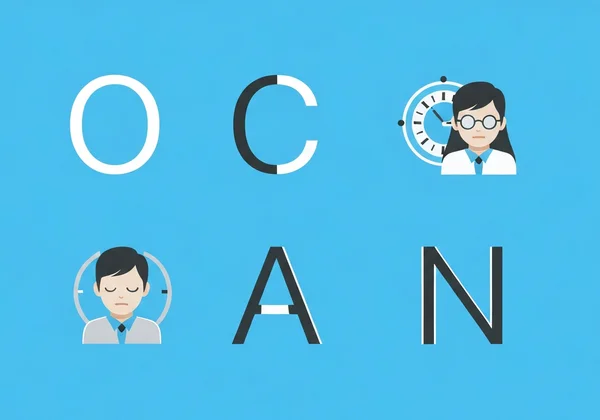
The Big 5 is often remembered by the acronym OCEAN (or CANOE). It assesses five fundamental traits that are believed to encompass the vast majority of human personality differences:
-
Openness to Experience: This trait reflects your curiosity, creativity, and appreciation for art and new ideas. High scorers are often imaginative and adventurous, while low scorers are more conventional and prefer routine.
-
Conscientiousness: This dimension measures your level of organization, discipline, and goal-directed behavior. People high in conscientiousness are typically reliable and hardworking, whereas those low in this trait are more spontaneous and flexible.
-
Extraversion: This trait relates to your sociability, assertiveness, and emotional expressiveness. Extraverts draw energy from social interaction, while introverts recharge through solitude.
-
Agreeableness: This reflects your tendency to be compassionate, cooperative, and considerate of others. High scorers are often described as warm and trusting, while low scorers can be more competitive and skeptical.
-
Neuroticism: Also known as Emotional Stability, this trait measures your tendency to experience negative emotions like anxiety, stress, and sadness. Individuals with high neuroticism are more emotionally reactive, while those with low scores are generally calm and resilient.
Scientific Foundation & Validity of the Big 5
Unlike many other personality models, the Big 5 wasn't developed from a single theory. It emerged from decades of statistical research where scientists analyzed how people described themselves and others. Researchers kept finding the same thing. Personality boils down to five broad factors. This holds true across cultures, languages, and ages. This makes the Big 5 a robust and scientifically valid tool for personality assessment.
Key Applications: From Personal Growth to Research
It gives you a clear self-portrait. Use it for career choices, better relationships, or growth. Students and researchers rely on it for personality studies. HR pros love it for teams and leadership. It predicts how you'll behave and connect at work.
Deconstructing the DISC Personality Assessment
The DISC assessment is a popular tool, especially in corporate settings. It's designed to be a simple, practical framework for understanding behavior and improving communication within teams.
The Four Quadrants of DISC: Dominance, Influence, Steadiness, Conscientiousness
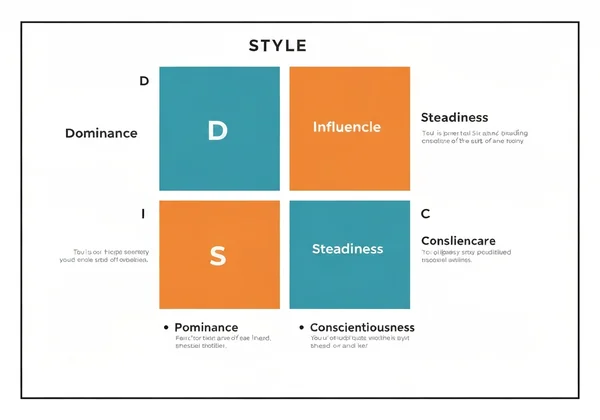
DISC categorizes behavior into four primary styles:
- Dominance (D): Direct, decisive, and results-oriented.
- Influence (i): Optimistic, outgoing, and persuasive.
- Steadiness (S): Calm, patient, and supportive.
- Conscientiousness (C): Analytical, precise, and systematic.
Most people have a blend of these styles, but one or two usually stand out. The model aims to help you understand your own behavioral patterns and recognize those of others to adapt your communication style accordingly.
Origins and Primary Use Cases of DISC
The DISC model is based on the theories of psychologist William Moulton Marston from the 1920s. It was later developed into an assessment tool primarily for workplace applications. Today, it's widely used in sales training, management coaching, and conflict resolution to help teams work together more effectively. Its strength lies in its simplicity and direct focus on observable behavior.
Strengths and Limitations of the DISC Model
The main strength of DISC is its accessibility. It provides a straightforward language for discussing behavior that is easy to remember and apply in daily interactions. However, its simplicity is also its biggest limitation. Critics point out that it lacks the scientific rigor and predictive validity of the Big 5. It describes how you tend to act in certain situations but doesn't explain the deeper personality traits that drive those actions.
Exploring the Enneagram Personality System
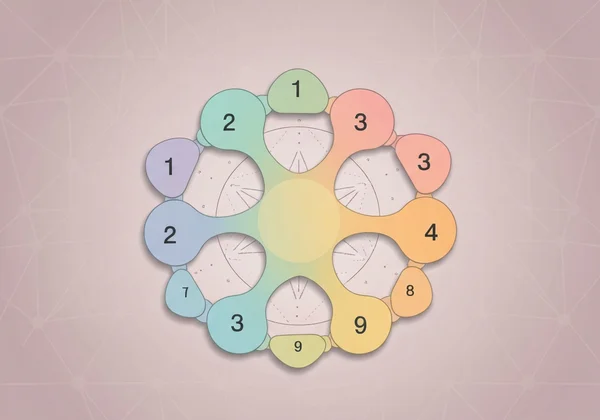
The Enneagram is a system that describes nine interconnected personality types. It has gained a large following among those seeking personal and spiritual growth due to its focus on core motivations, fears, and pathways for development.
The Nine Types: Motivations, Fears, and Growth Paths
Unlike the Big 5 or DISC, the Enneagram's focus is not on traits or behaviors, but on the "why" behind them. Each of the nine types (e.g., The Reformer, The Helper, The Achiever) is defined by a core belief about how the world works, a fundamental fear, and a primary desire. The system suggests that understanding your type can reveal your deepest motivations and provide a clear path for personal growth.
Historical Context and Spiritual Roots
The exact origins of the Enneagram are debated, but its modern form draws from ancient wisdom traditions and the teachings of 20th-century spiritual figures like Oscar Ichazo and Claudio Naranjo. Because of its spiritual and esoteric roots, it is not considered a scientific model within academic psychology. It relies on self-observation and anecdotal evidence rather than empirical validation.
When is the Enneagram Most Useful?
The Enneagram can be a powerful tool for introspection. Many people find that it resonates deeply and helps them understand the unconscious drivers of their behavior in a way other tests do not. It is most useful as a framework for self-reflection, personal development, and understanding interpersonal dynamics from a motivational perspective, particularly in coaching or counseling contexts.
Head-to-Head: Big 5, DISC, and Enneagram Compared
Now that we've reviewed each model, let's put them side-by-side to understand their key differences and help you decide which tool is best for your needs.
Scientific Rigor vs. Practical Application
This is the most significant difference.
- Big 5: The clear winner in scientific rigor. It is empirically validated, reliable, and the accepted standard in psychological research.
- DISC: A practical, application-focused tool for the workplace. It is not scientifically validated as a comprehensive personality model but serves as a useful behavioral framework.
- Enneagram: A system for spiritual and personal growth with no scientific basis. Its value is subjective and based on personal resonance.
Focus: Behavior, Motivations, or Traits?
Each model measures something different:
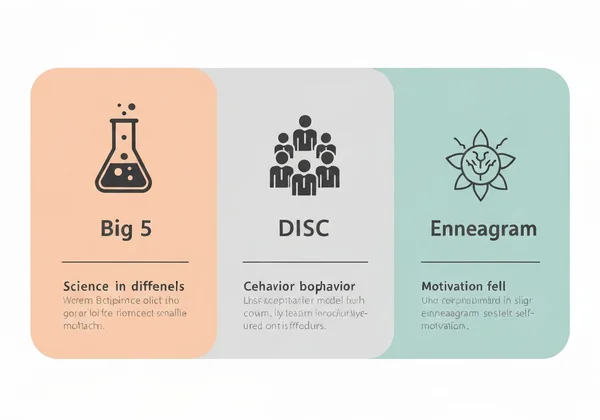
- Big 5 measures stable, underlying personality traits. It answers the question, "What are my core characteristics?"
- DISC measures observable behaviors. It answers the question, "How do I tend to act?"
- Enneagram explores core motivations and fears. It answers the question, "Why do I act the way I do?"
Best Use Cases for Each Assessment
Your goal should determine your choice:
-
Choose the Big 5 for a deep, reliable, and comprehensive understanding of yourself, for career guidance, academic purposes, or any situation requiring a scientifically sound assessment.
-
Choose DISC for a quick, simple tool to improve team communication and understand workplace dynamics.
-
Choose the Enneagram for introspective work, spiritual development, and exploring your core psychological drivers.
Why the Big 5 Offers Comprehensive & Actionable Insights
While DISC and the Enneagram offer valuable perspectives, the Big 5 provides the most complete and foundational picture. Understanding your core traits—like your levels of Conscientiousness or Neuroticism—helps you understand why you exhibit certain behaviors (DISC) and what might be driving your motivations (Enneagram). It offers a stable baseline from which you can predict behavior and plan for real, lasting personal growth. Ready to discover your core traits?
The Takeaway
Choosing a personality assessment isn't about finding the "best" one, but about finding the right one for your specific goals. DISC offers a simple language for workplace behavior, and the Enneagram provides a rich framework for understanding your deepest motivations.
For real, science-backed clarity on your traits—think career fits or better relationships—the Big 5 Personality Test gives you the edge every time. It provides the most reliable foundation for self-discovery, career planning, and improving your relationships.
Want to see your traits in action? Jump in and get your results today.
Start Your Big 5 Personality Test Now
Frequently Asked Questions About Personality Tests
How accurate is the Big 5 personality test compared to others?
The Big 5 is considered the most accurate and reliable personality assessment from a scientific standpoint. Its accuracy is supported by decades of research showing high levels of validity (it measures what it claims to measure) and reliability (it produces consistent results over time). While other tests can feel accurate, the Big 5 is the most trusted for objective measurement.
What personality test is typically used by psychologists and researchers?
Psychologists and academic researchers overwhelmingly use the Big 5 (also known as the Five-Factor Model). Its strong empirical foundation and ability to predict life outcomes make it the gold standard for scientific studies on personality.
Is the Big 5 test scientifically valid, or just another fad?
The Big 5 is far from a fad. It is a scientifically validated framework that has been the dominant model in personality psychology for over 30 years. Its credibility comes from extensive, cross-cultural research, not popular trends.
What is the main difference between the Big Five and other popular tests like MBTI, DISC, or Enneagram?
The main difference lies in their foundation and focus. The Big 5 is a trait-based model grounded in empirical science, measuring your levels on five spectrums. DISC is a behavioral model for practical application, while the Enneagram and MBTI are "type" models focused on motivations or cognitive preferences, with less scientific support.
How can I best use my Big 5 results for personal or professional growth?
Your Big 5 results are a roadmap for growth. For example, understanding a high Neuroticism score can help you develop better stress-management techniques. Knowing your level of Conscientiousness can guide you toward careers that match your natural work style. The best way to start is to get your personalized results and use the actionable insights to set meaningful goals for yourself.