Good Qualities of a Human: 25 Traits That Build Character
The good qualities of a human are not just a list of pleasant behaviors. They are patterns in how a person thinks, feels, chooses, and treats others when life is easy and when it is complicated. Most people search for this topic because they want a practical answer: What makes someone trustworthy, kind, emotionally steady, and worth relying on? Personality science can help by showing that many good traits are habits built on deeper tendencies, not fixed labels. If you want a structured way to reflect on your own patterns, a science-backed Big Five personality self-reflection tool can give useful language for traits such as openness, conscientiousness, extraversion, agreeableness, and emotional stability.

What Makes a Quality "Good"?
A good quality is a trait or habit that supports well-being, trust, cooperation, and responsible action. It is not the same as being perfect, always agreeable, or endlessly productive. A person can be warm and still set boundaries. They can be ambitious and still be humble. They can be emotionally sensitive and still act with courage.
The best qualities of a human are usually good because they help in more than one setting. Honesty matters in friendships, workplaces, families, and communities. Patience helps with learning, conflict, parenting, leadership, and stress. Curiosity makes people better listeners and better problem solvers. These qualities are also visible in behavior. We do not recognize compassion because someone claims to have it; we recognize it because they notice suffering and respond with care.
It also helps to separate moral qualities from temperament. Someone may be naturally quiet, energetic, cautious, or adventurous. Those differences are not automatically good or bad. Character appears in how a person works with their natural tendencies. A highly introverted person can be deeply generous. A highly assertive person can be respectful. A highly anxious person can be brave because courage often means acting thoughtfully despite discomfort.
25 Good Qualities of a Human Being
Below is a practical list of good characteristics of a human being, grouped by how they tend to show up in everyday life.
Qualities that build trust
Honesty means telling the truth with care instead of using truth as a weapon. Integrity means your private choices match your public values. Reliability means people can count on your word, your effort, and your follow-through. Accountability means you can admit mistakes without turning every problem into blame. Fairness means you try to apply standards consistently, even when doing so is inconvenient.
These traits make relationships feel safer because they reduce guessing. A reliable person may not always be available, but they communicate clearly. An accountable person may still fail, but they repair what they can. Trust grows from repeated evidence.
Qualities that support kindness
Empathy is the ability to imagine another person's experience without assuming you fully know it. Compassion turns that awareness into helpful action. Respect means treating people as whole human beings, not as obstacles, labels, or tools. Generosity is the willingness to share time, attention, knowledge, or resources when it is reasonable. Gratitude keeps a person aware of what others contribute.
These positive qualities of a human being are not about being soft in every situation. Healthy kindness includes boundaries. A compassionate person can say no. A respectful person can disagree. The difference is that they try not to dehumanize people while doing it.
Qualities that help growth
Curiosity keeps the mind open. Humility makes learning possible because it allows a person to say, "I may not know enough yet." Perseverance helps people continue through effort, boredom, and setbacks. Adaptability lets them update their plans when reality changes. Self-discipline helps them choose long-term values over short-term impulses.
These qualities matter because human growth is rarely dramatic. More often, it is the quiet repetition of better choices. A student studies when motivation fades. A manager listens before reacting. A friend apologizes instead of defending every detail. Over time, those small actions become character.
Qualities that improve emotional life
Patience creates space between feeling and action. Emotional awareness helps a person notice what they feel before the feeling takes over the conversation. Courage helps them face discomfort, speak honestly, or make a needed change. Forgiveness can release resentment when repair is possible, while still allowing wise boundaries. Hope gives people a reason to keep building.
Emotional maturity does not mean never feeling anger, sadness, fear, or jealousy. It means those emotions become information rather than automatic instructions. This is why many good traits of a human are not separate from emotional regulation. They depend on the ability to pause, reflect, and respond.
Qualities that strengthen society
Cooperation helps people solve problems together. Civic responsibility means caring about the shared environment, not only private success. Tolerance makes room for differences without requiring agreement on everything. Wisdom combines knowledge, experience, and judgment. A sense of purpose helps people connect daily choices to something larger than the moment.
Good qualities of human society are built from individual choices repeated across families, teams, schools, and communities. A healthy environment is not created by one perfect person. It is created when many people practice respect, responsibility, and repair often enough that cooperation becomes normal.
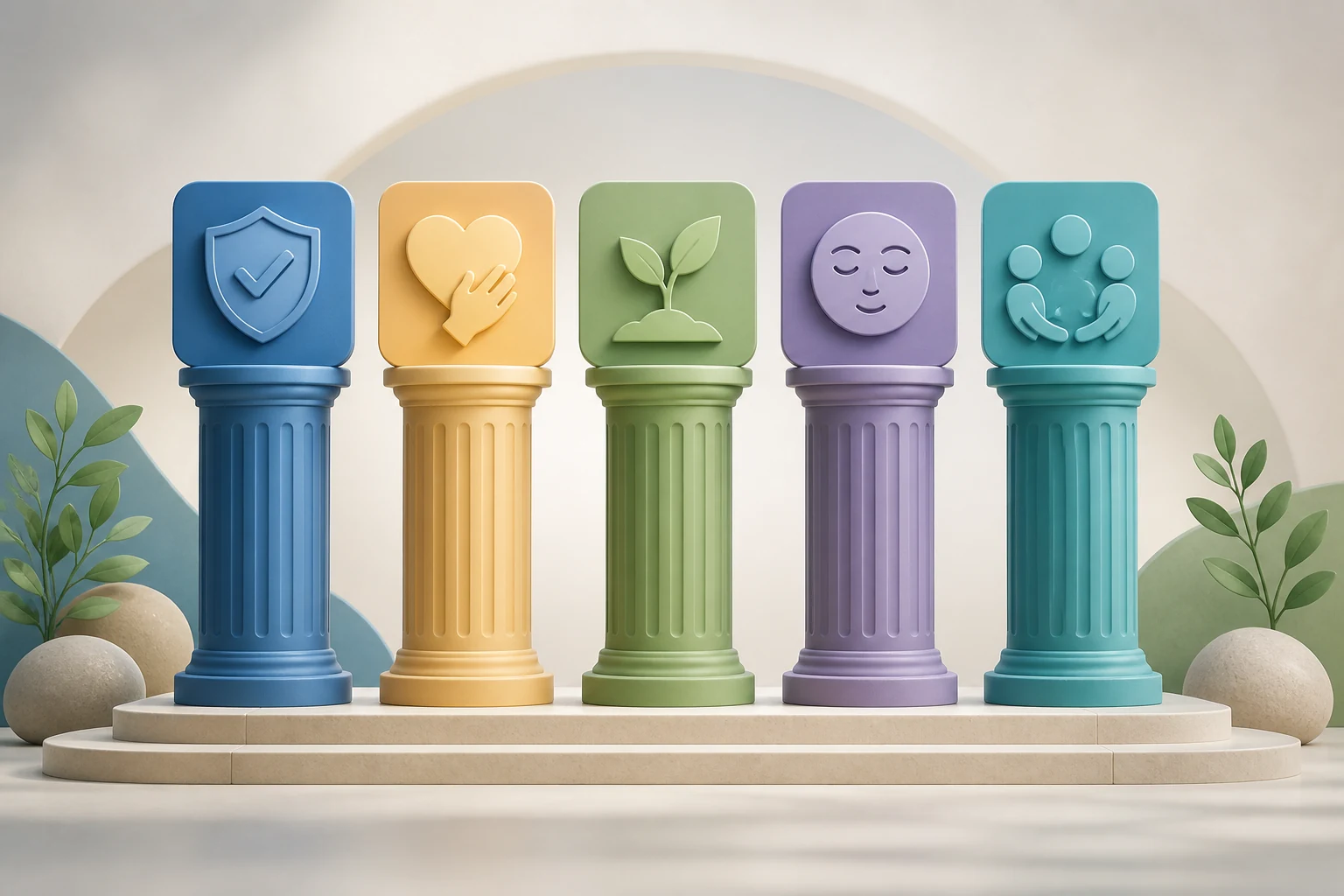
How the Big Five Helps Explain Good Characteristics
The Big Five model does not rank people as good or bad. Instead, it describes broad personality dimensions that influence how traits may appear. That makes it useful for understanding the qualities of a good human without reducing character to a single label.
Agreeableness is closely connected with warmth, empathy, cooperation, and trust. People high in agreeableness may find it natural to consider others' needs. People lower in agreeableness may still be ethical and caring, but they may express care through candor, protection, or principled challenge rather than easy harmony.
Conscientiousness often supports reliability, self-discipline, responsibility, and follow-through. It is especially relevant when people ask about the good qualities of a human resource manager, teacher, parent, or team leader. In professional settings, kindness matters, but people also need planning, consistency, and fair standards.
Openness can support curiosity, imagination, and tolerance for new ideas. Extraversion can support social confidence, enthusiasm, and positive energy, though quiet people can also be deeply engaged and socially generous. Emotional stability can support patience, resilience, and steady judgment under pressure.
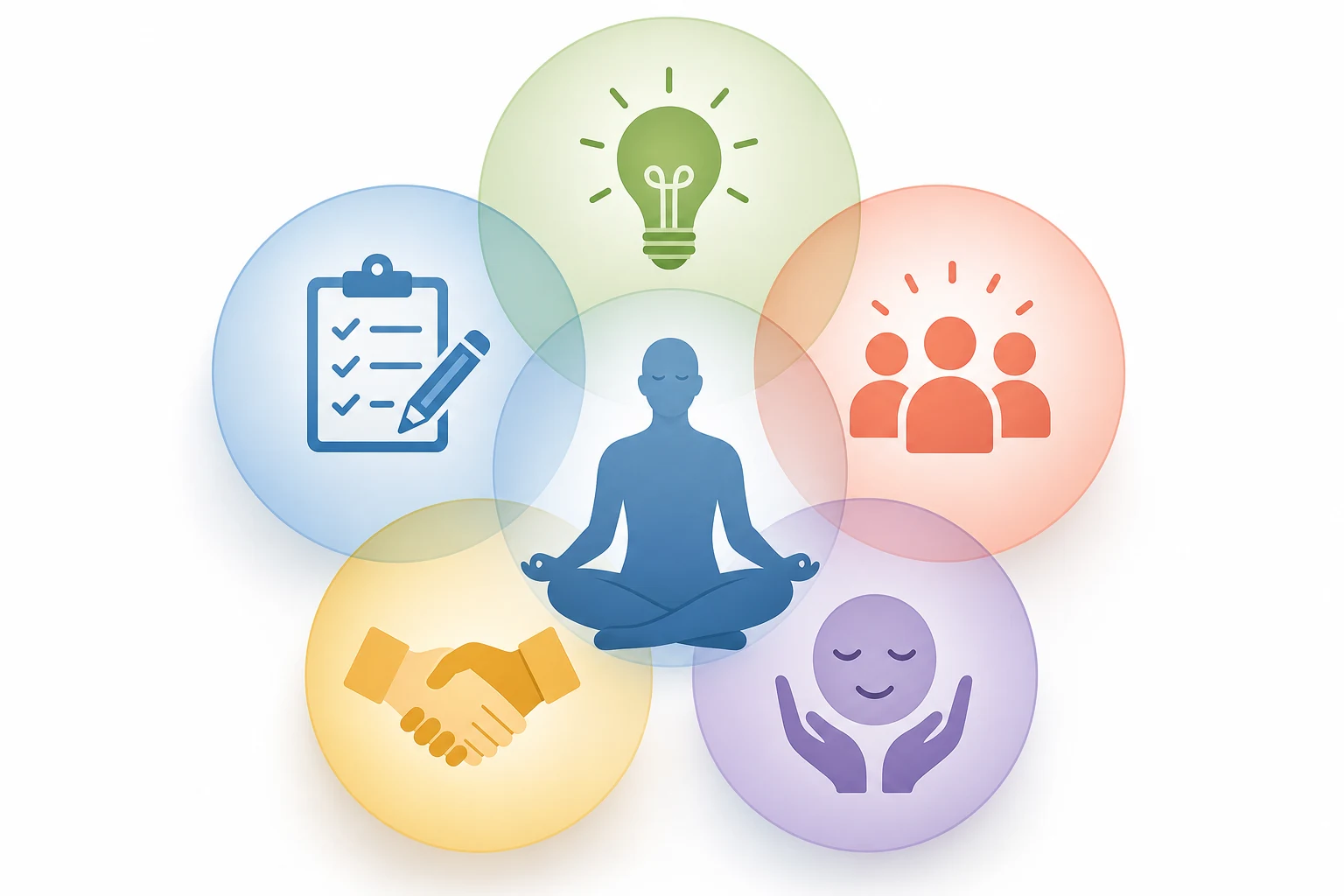
The value of a Big Five personality framework is that it gives more precise language for self-reflection. Instead of asking, "Am I a good person?" you can ask more useful questions: Where do I already show care? Where do I struggle with follow-through? When do emotions shape my choices too quickly? Which strengths can I use more intentionally?
Are There 5, 10, or 100 Qualities of a Good Person?
Search results often promise 5 qualities, 10 qualities, or even 100 qualities of a good person. Those lists can be helpful, but the number matters less than the structure. A long list may inspire reflection, yet it can also become vague. A short list is easier to remember, but it may leave out important differences between kindness, responsibility, emotional maturity, and wisdom.
If you want the 5 best qualities of a person, choose a balanced set: integrity, empathy, reliability, humility, and courage. Integrity protects truth. Empathy protects connection. Reliability protects trust. Humility protects learning. Courage protects action.
If you want 10 qualities of a good human being, add patience, gratitude, fairness, self-discipline, and curiosity. These ten traits cover most everyday situations: how you speak, how you listen, how you keep promises, how you handle mistakes, and how you keep growing.
If you want 100 qualities of a person, treat the longer list as a vocabulary bank rather than a checklist. No one expresses every positive trait at a high level every day. A healthier goal is to identify the qualities most relevant to your current life stage, relationships, and responsibilities.
How to Develop Positive Qualities in Real Life
Good qualities become stronger when they move from ideals into repeated behavior. The following process keeps growth practical.
First, choose one quality that matters now. If your relationships feel tense, choose patience or listening. If your work feels scattered, choose reliability or self-discipline. If you feel stuck, choose curiosity or courage.
Second, define the quality as an observable action. "Be more honest" is broad. "Tell my teammate by Tuesday if I cannot meet a deadline" is concrete. "Be kinder" is broad. "Ask one sincere follow-up question before giving advice" is concrete.
Third, notice the personality pattern that makes the action easier or harder. A highly conscientious person may find planning natural but struggle with flexibility. A highly agreeable person may offer care easily but avoid necessary conflict. A person high in emotional reactivity may need a pause ritual before difficult conversations.
Fourth, review progress without turning it into self-judgment. The point is not to prove you are already ideal. The point is to build a better relationship with your own habits. Tools such as a personality trait reflection test can support that process by giving you a neutral map for thinking about patterns, strengths, and growth edges.

Using Good Qualities as a Personal Reflection Tool
The good qualities of a human are most useful when they become questions, not labels. Instead of asking whether you are honest, ask where honesty feels easy and where it becomes costly. Instead of asking whether you are compassionate, ask who receives your patience and who does not. Instead of asking whether you are wise, ask how often you update your views when new evidence appears.
This approach also keeps the topic humane. People are uneven. Someone can be generous with friends and impatient with family. Someone can be responsible at work and avoidant in personal conflict. Someone can be courageous in public and fearful in private. A trait list should help you notice those patterns with more clarity, not use them to flatten yourself or others.
If you want to connect these ideas to a structured personality lens, you can explore science-backed Big Five insights as a starting point for reflection. Use any result as information, not a verdict. The deeper goal is not to collect flattering labels. It is to practice the qualities that make your choices more honest, kind, steady, and useful to the people around you.
FAQ
What are 5 good qualities of a person?
Five good qualities of a person are integrity, empathy, reliability, humility, and courage. Together, they support trust, connection, responsibility, learning, and action. Other lists may use different words, but a strong short list should include both how a person treats others and how they manage themselves.
What are the 10 qualities of a human?
Ten useful qualities of a human are honesty, compassion, respect, accountability, patience, curiosity, self-discipline, fairness, gratitude, and courage. These qualities cover moral behavior, emotional maturity, relationships, and personal growth.
What are the good qualities of a human?
The good qualities of a human include traits that help a person live responsibly and relate well to others. Examples include kindness, integrity, empathy, reliability, humility, resilience, wisdom, and cooperation. They are best understood through consistent behavior rather than isolated claims.
What are the 10 good qualities?
The 10 good qualities most people recognize are honesty, empathy, reliability, respect, patience, humility, courage, gratitude, fairness, and self-discipline. These traits are common because they improve trust and reduce unnecessary harm in many areas of life.
Are good qualities the same as personality traits?
They overlap, but they are not identical. Personality traits describe broad tendencies, such as being organized, sociable, curious, cooperative, or emotionally steady. Good qualities are the valued habits and choices people build with those tendencies, such as keeping promises, listening well, or acting fairly.
Can someone develop good characteristics over time?
Yes. People can strengthen good characteristics through practice, feedback, reflection, and supportive environments. Change is usually gradual, so it helps to choose one quality, define it as a specific behavior, and review progress with patience.
What is the difference between good and bad qualities of a person?
Good qualities tend to build trust, responsibility, care, and growth. Bad qualities tend to damage trust, avoid responsibility, ignore harm, or block learning. Most people show a mixture, which is why reflection should focus on patterns and improvement rather than harsh labels.