Personality Traits Examples for Real Life, Students, and Characters
Personality traits examples are useful when you want clearer language for how people tend to think, feel, choose, and relate to others. A trait is not a fixed label or a moral verdict. It is a pattern that may show up more often in some situations than others. For a grounded way to connect trait words with the Big Five model, you can use a Big Five personality self-reflection tool as a starting point for personal insight. This guide gives you practical examples for real life, students, and fictional characters, while keeping the tone flexible: traits describe tendencies, not destiny.
What Personality Traits Mean in Everyday Language
A personality trait is a relatively stable tendency in behavior, emotion, motivation, or attention. "Stable" does not mean permanent. A person can become more organized, patient, assertive, or emotionally steady with practice and context. It simply means the pattern is noticeable enough that people may recognize it across repeated situations.
In everyday language, trait words help answer questions like these:
- How does someone usually approach new experiences?
- How do they respond to pressure, deadlines, or disagreement?
- What kind of social setting gives them energy?
- How do they handle responsibility, routine, and follow-through?
- What makes them easier or harder to work with?
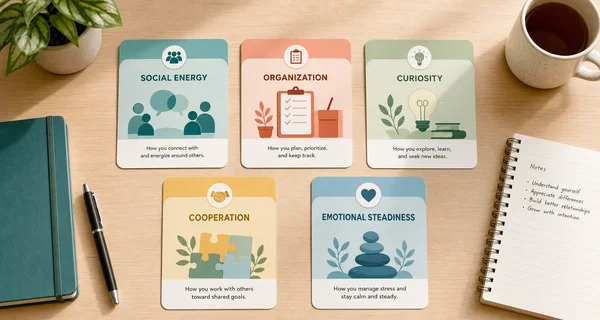
The Big Five framework groups many trait words under five broad dimensions: openness, conscientiousness, extraversion, agreeableness, and neuroticism. That structure can make a long personality traits list easier to use. For example, "curious" and "imaginative" often point toward openness, while "organized" and "dependable" often point toward conscientiousness. A science-backed OCEAN personality test can help you see those broader patterns without reducing a person to one word.
A Personality Traits Examples List by Category
The most helpful personality trait examples are specific enough to picture but flexible enough to avoid stereotyping. Instead of dividing all traits into "good" and "bad," it is more accurate to think in terms of strengths, challenges, and context-dependent tendencies.
| Category | Personality traits examples | What they may look like |
|---|---|---|
| Social energy | outgoing, reserved, expressive, sociable, private | Choosing group discussion, one-on-one conversation, or quiet reflection |
| Responsibility | dependable, careful, disciplined, punctual, thorough | Finishing tasks, planning ahead, checking details |
| Curiosity | imaginative, open-minded, inventive, adventurous, reflective | Trying new ideas, asking questions, seeing many angles |
| Cooperation | kind, patient, tactful, forgiving, supportive | Listening well, easing conflict, helping others feel included |
| Drive | ambitious, persistent, decisive, competitive, goal-oriented | Pushing projects forward and staying focused |
| Emotional style | calm, sensitive, reactive, resilient, cautious | Responding to stress, criticism, uncertainty, or change |
| Independence | self-reliant, skeptical, assertive, unconventional, direct | Questioning assumptions and making personal choices |
| Flexibility | adaptable, spontaneous, playful, easygoing, experimental | Changing plans, improvising, or tolerating ambiguity |
Positive personality traits examples often include honest, empathetic, reliable, patient, curious, courageous, humble, disciplined, generous, and fair. These words are useful because they point to behaviors people usually value in relationships, classrooms, teams, and leadership roles.
Negative personality traits examples are better handled with care. Words like impulsive, rigid, careless, defensive, resentful, arrogant, manipulative, unreliable, impatient, or avoidant can describe patterns that create friction. They should not be used as permanent identities. A more constructive version asks, "When does this tendency show up, what triggers it, and what skill would balance it?"
Personality Traits Examples in Real Life
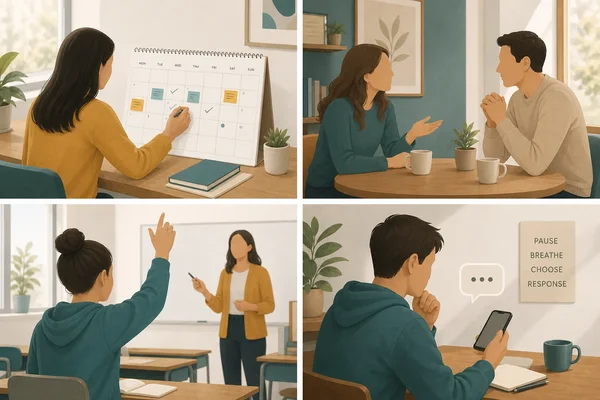
Personality traits examples in real life are easiest to understand when you connect a word to a situation. A trait becomes meaningful when you can say what someone does, not just what someone "is."
In a workplace, a conscientious person may keep clean project notes, reply on time, and notice missing details before a deadline. A highly open person may suggest a new workflow, question old assumptions, or enjoy brainstorming before choosing a plan. An agreeable person may soften tension in a meeting, while a more direct person may raise problems quickly so the team can solve them.
In friendships, an empathetic trait may show up as remembering what matters to someone and checking in without being asked. A reserved trait may show up as needing quiet time after a busy weekend. Assertiveness may look like saying no without hostility. Sensitivity may look like noticing subtle changes in tone. None of these examples is automatically good or bad. The usefulness depends on the setting, intensity, and the skill around the trait.
In family life, patience might appear during repeated conversations, while impulsiveness might appear in quick spending decisions or sudden reactions. In learning settings, curiosity can lead someone to explore beyond the assignment, while perfectionism can help with quality but slow down completion. These examples of personality traits show why context matters: the same tendency can help in one moment and create pressure in another.
Personality Traits Examples for Students
Personality traits examples for students should be descriptive, not limiting. Students are still developing habits, confidence, study methods, social skills, and emotional awareness. Trait language works best when it helps a student notice patterns and choose strategies.
A curious student might ask extra questions, connect a lesson to other subjects, or enjoy open-ended projects. A disciplined student may use checklists, review notes regularly, and start assignments early. A collaborative student may help peers understand instructions or share resources. A cautious student may double-check answers and prefer clear expectations. A creative student may find original examples, metaphors, or presentation styles.
Some student traits can create challenges when they are too intense or unsupported. A highly competitive student may struggle when teamwork matters more than ranking. A very reserved student may know the material but hesitate to participate. A spontaneous student may bring energy to group work but forget deadlines. A perfectionistic student may produce strong work but feel stuck starting.
A simple classroom reflection can help:
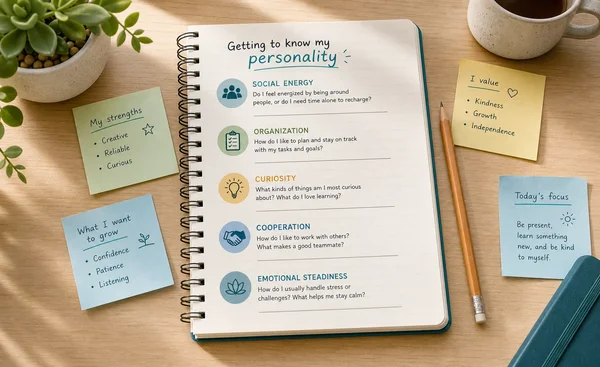
- Name the trait without judgment.
- Identify one situation where it helps.
- Identify one situation where it gets in the way.
- Choose one small balancing habit.
- Review whether the habit worked after a week.
For example, "I am detail-oriented" becomes more useful when paired with "I will set a timer so I do not spend the whole evening polishing one paragraph." That turns a trait word into an action plan.
Personality Traits Examples for Characters and DnD
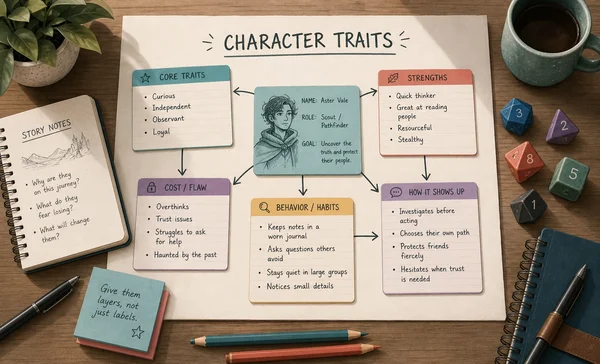
Writers and role-playing players often search for a personality examples list because characters need patterns that create choices. For fiction or DnD, a trait should do more than decorate a profile. It should influence how the character speaks, makes decisions, reacts under pressure, and changes over time.
Here are quick examples:
- Brave: enters danger to protect a friend, but may underestimate risk.
- Suspicious: notices hidden motives, but may reject genuine help.
- Charming: builds alliances quickly, but may avoid honest conflict.
- Loyal: keeps promises, but may excuse harmful behavior from allies.
- Curious: investigates strange clues, but may open doors too soon.
- Proud: refuses humiliation, but may struggle to apologize.
- Merciful: spares enemies, but may create future complications.
- Practical: chooses workable plans, but may dismiss imagination.
- Restless: keeps the story moving, but may resist patience.
- Idealistic: fights for principles, but may ignore messy tradeoffs.
For character creation, pair each trait with three details: a strength, a cost, and a visible behavior. "Ambitious" becomes stronger when you know the character studies late, envies rivals, and fears being ordinary. "Kind" becomes stronger when you know the character gives people second chances, even when that creates risk.
How to Choose Useful Trait Words
A long personality traits examples list can become overwhelming. The goal is not to collect as many words as possible. The goal is to choose words that explain a pattern clearly and fairly.
Use this quick filter:
| Question | Better trait wording |
|---|---|
| Is it observable? | "interrupts when excited" is clearer than "bad" |
| Is it specific? | "cautious with money" is clearer than "negative" |
| Is it balanced? | "independent, sometimes resistant to advice" is fairer than "stubborn" |
| Is it contextual? | "quiet in large groups" is clearer than "antisocial" |
| Is it change-friendly? | "building follow-through" is more useful than "lazy" |
When describing yourself, choose trait words that help you take the next step. When describing someone else, choose words you could explain with examples. When describing a student, employee, friend, or character, avoid turning one behavior into a whole identity. Trait language is best when it increases understanding.
Use Personality Traits Examples as Starting Points, Not Labels
The best way to use personality traits examples is to treat them as prompts for reflection. A trait word can help you notice a pattern, but it should not close the conversation. People act differently across relationships, cultures, roles, stress levels, and stages of life.
If you are exploring your own personality, start with two or three traits that feel familiar and ask for evidence. Where do they show up? Where do they disappear? What situations bring out the strongest version of the trait? What habit would make the trait more helpful?
If you want a broader framework, you can explore your Big Five pattern and compare your everyday examples with openness, conscientiousness, extraversion, agreeableness, and neuroticism. Use the results as educational self-reflection, not as a clinical assessment or a final verdict. The most useful outcome is clearer language for growth, communication, and better choices.
FAQ
What are the 7 basic personality traits?
There is no single universal list of seven basic personality traits. In psychology education, the Big Five are often used as a broad framework: openness, conscientiousness, extraversion, agreeableness, and neuroticism. Other models may include additional dimensions such as honesty, humility, self-control, or social adaptability. If you see a list of seven, check which model it comes from.
What are 100 character traits?
Here are 100 character traits: honest, kind, brave, patient, curious, loyal, humble, generous, careful, disciplined, creative, calm, witty, thoughtful, optimistic, practical, decisive, gentle, fair, respectful, flexible, resilient, sociable, reserved, independent, assertive, cautious, adventurous, ambitious, forgiving, reliable, sincere, playful, organized, imaginative, persistent, tactful, cooperative, analytical, compassionate, confident, modest, energetic, focused, observant, persuasive, skeptical, trusting, sentimental, resourceful, protective, diplomatic, direct, spontaneous, studious, bold, orderly, sensitive, easygoing, intense, cheerful, serious, inventive, traditional, rebellious, punctual, private, expressive, nurturing, competitive, idealistic, realistic, frugal, generous, meticulous, adaptable, proud, merciful, restless, courageous, anxious, defensive, impatient, impulsive, rigid, careless, arrogant, resentful, avoidant, manipulative, pessimistic, distracted, secretive, stubborn, jealous, controlling, passive, reckless, cynical, dramatic, and dependable.
What are 5 good personality traits?
Five good personality traits are honesty, empathy, reliability, patience, and curiosity. They are "good" because they often support trust, learning, cooperation, and steady relationships. Still, every trait works best with balance. For example, honesty needs tact, patience needs boundaries, and curiosity needs respect for privacy.
What are 20 character traits?
Twenty character traits are brave, loyal, curious, cautious, witty, proud, humble, ambitious, kind, skeptical, impulsive, patient, generous, disciplined, creative, reserved, outgoing, practical, idealistic, and resilient. For stronger writing, pair each trait with a behavior. "Loyal" might mean keeping a promise; "impulsive" might mean acting before checking the risk.
What are examples of negative personality traits?
Examples of negative personality traits include arrogance, dishonesty, impatience, carelessness, defensiveness, resentment, rigidity, manipulation, recklessness, and unreliability. A safer way to use these words is to describe the behavior and context. Instead of "She is unreliable," say, "She often misses agreed deadlines when the plan is unclear."
What are personality traits examples for students?
Student trait examples include curious, disciplined, collaborative, cautious, creative, persistent, organized, reflective, competitive, reserved, and adaptable. These traits can guide study strategies. A curious student may benefit from project-based learning, while a reserved student may prefer written preparation before speaking in class.